
Transversal Skills
In addition to the solid scientific and research training that forms the core of doctoral studies at IST, training in transversal skills is essential for better preparing PhD holders for professional life, whether in academia or beyond.
Transversal skills encompass specific training critical for completing doctoral studies, such as writing scientific articles, communicating science, research methods, and managing scientific projects, as well as general skills that are valuable beyond doctoral studies, such as ethics, negotiation, leadership and entrepreneurship.
Each year, Técnico Doctoral School offers a wide range of training courses in transversal skills, available to all PhD students. These courses give opportunity to PhD students from different programmes to meet and interact, fostering the cross-fertilization of knowledge and ideas.
Courses
Transversal Skills Courses Schedule 2026-27

Communication Skills in Engineering
The objective is to develop personal competencies in students, dealing with oral and written communications, and search and structuring of information, essential to the practice of engineer in general, and in particular for Ph.D. students on presenting their work, and writing papers and the thesis.
Credits: 3 ECTS
Coordinator:
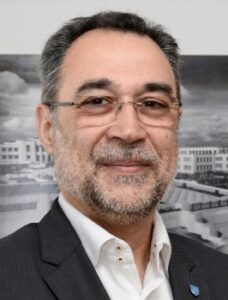
Luis M. Correia is a Professor in Telecommunications, with the research activities developed in INESC INOV-Lab. He has acted as a consultant for the Portuguese telecommunications operators and regulator, besides other public and private entities, and has been in the Board of Directors of a telecommunications company. He has participated in 34 projects within European frameworks, having coordinated 6, besides national ones. He has lectured 81 advanced training courses for industry and academia at the national and international levels. He has supervised 240 M.Sc./Ph.D. students, having edited 6 books, contribute to European strategic documents, and authored over 550 papers in international and national journals and conferences, for which served also as a reviewer, editor and board member. Internationally, he was part of 43 Ph.D. juries, and 97 research projects and institutions evaluation committees for funding agencies in 13 countries, and the European Commission and COST. He has been the Chairman of Conference, of the Technical Programme Committee and of the Steering Committee of 25 major conferences. He is an Honorary Professor of the Gdańsk University of Technology (Poland) and a recipient of the 2021 EurAAP Propagation Award “for leadership in the field of propagation for wireless and mobile communications”.
Science Communication
This course will raise awareness among PhD students about the importance of science and engineering communication. It will also provide them with skills to contribute to the increase of scientific culture in society, promoting practical knowledge of science and technology communication activities, from design to impact measurement.
Credits: 3 ECTS
Coordinator:
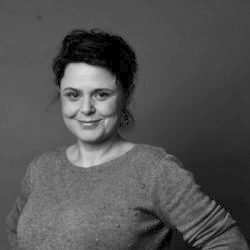
Joana Lobo Antunes is professor of Science and Engineering Communication, Department of Engineering in Mineral and Energy Resources, Instituto Superior Técnico, since 2025. She is also Deputy Director for the President in Communication, Image and Marketing. She has been invited professor in Science Communication at Universidade Nova de Lisboa (2012-2025), where she was also post-doctoral researcher in Promotion and Administration of Science and Technology (2012-2015). She was appointed Executive Director at Centro Ciência Viva de Sintra (2014-2016), and Head of Communications at ITQB NOVA (2016-2019). Founder and former President of Portuguese Science Communicators Network SciComPT, Joana has also led several awarded Science Communication projects such as science radio show 90 Segundos de Ciência and podcast, book and exhibition 110 histórias, 110 objetos.
Design and Writing a Research Project
This curricular unit aims to prepare students to develop and write a research project with funding potential, aligned with the production of scientific knowledge and with an impact on society.
Credits: 3 ECTS
Coordinator:
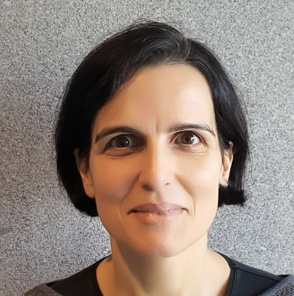
Mónica Oliveira is Full Professor in Decision Sciences at the Engineering and Management Department of IST and coordinates the the Decision Science and Management Engineering group (DECISING) of the Centre for Management Studies of IST (CEGIST). Her research interests include the development of management science models to assist policy and decision makers in health and clinical settings, with a special interest in multi-criteria value modelling using participatory processes. Her work, enhancing and applying management science techniques in multiple organizations, has been recognised by several awards, including by the INFORMS DAS and Society of Decision Professionals 2023 Decision Practice award. She has published her research in Operations Research, Management Science, and Health Economics, Policy and Management international journals. She has been leading national and international research projects mostly developed in collaboration with industry, has been involved in advisory boards from the Portuguese Ministry of Health, and has coordinated redeSAÚDE ULisboa between 2021-2024. She has a Licenciatura in Economics from the University of Porto (1997) and a MSc and a PhD in Operational Research by the London School of Economics and Political Science (UK) (1999 and 2003).
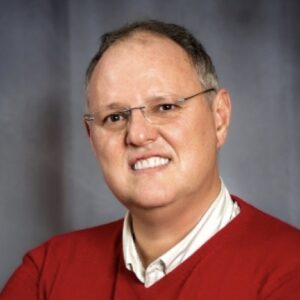
Bruno Miguel Soares Gonçalves is graduated in Physics Engineering by Instituto Superior Técnico (1997), has a Master in Physics (IST/UTL, 2000) and a PhD in Physics Engineering (IST/UTL, 2003). In 2005 his PhD thesis was distinguished with the “European Physical Society Plasma Division PhD Research Award”. In February 2012 he has got his Habilitation for Coordination of Science degree (“Habilitação para o Exercício de Funções de Coordenação Científica em Engenharia Física Tecnológica”).
Bruno Soares Gonçalves is Full Researcher at the Instituto Superior Técnico, President of the Instituto de Plasmas e Fusão Nuclear (since May 2012) and responsible for the Engineering and Systems Integration Group of IPFN. He has led several research projects in the areas of development of diagnostics for nuclear fusion devices and of control systems and data acquisition. He is co-inventor of 8 granted patents, co-author of one chapter in a book, in one hundred and thirty five papers published in international journals and in sixty two papers published in international conference proceedings. He is a member of several international scientific committees of conferences in the field, the national delegate on the Governing Board of Eurofusion and national delegate on the Governing Board of Fusion for Energy.
Design Thinking Approach to Research
This course introduces the principles of design thinking and applies them to the research process. Students will learn to approach research with empathy, creativity, and a user-centered mindset, ultimately leading to more innovative and impactful research outcomes.
Credits: 3 ECTS
Coordinator:
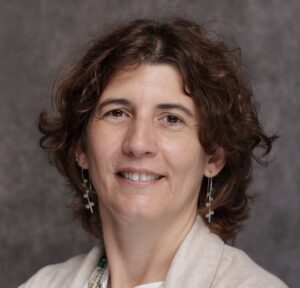
Joana Mendonça is a professor at Instituto Superior Técnico/ University of Lisbon. She was President of the Board of the Nacional Innovation Agency in Portugal (ANI) between May 2021 and March 2023. She was Deputy Director at the Directorate for Education and Science Statistics (DGEEC, between 2010 and 2012. She was scientific director of the Carnegie Mellon Portugal Partnership (2012-2021) and scientific coordinator at the Center of Engineering and Product Development, CEiiA, (2018-2021). During 2016, she was an assistant to the Minister for Economy for issues related to Innovation and Technology and in 2009-2010, she was an assistant to the Secretary of State for Science, Technology and Higher Education, both in the Government of Portugal.
She is a member of the Center for Innovation, Technology and Policy Research, IN+, where she develops research on management of technology and innovation, technology commercialization and adoption. She teaches Entrepreneurship and Innovation Management and Design Thinking.
Artificial Intelligence and Society
The objective of this course is to equip students with an understanding of the social and ethical implications of AI, knowledge of the impact of AI on healthcare, science and other sectors, and the ability to understand and analyze AI policy issues and propose solutions.
Credits: 3 ECTS
Coordinators:
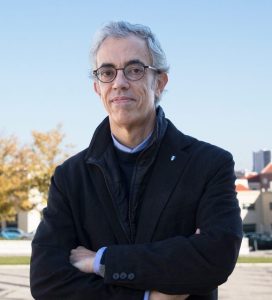
Mário Figueiredo is a Distinguished Professor at Instituto Superior Técnico, University of Lisbon, with the Department of Electrical and Computer Engineering, and holds the Feedzai Chair on Machine Learning. He is a group leader and area coordinator at Instituto de Telecomunicações. His interests include machine learning, signal processing, and optimization. He has received several honors and awards, namely: Fellow of the Institute of Electrical and Electronics Engineers (IEEE), Fellow of the International Association for Pattern Recognition (IAPR), Fellow of the European Association for Signal Processing (EURASIP), and of Fellow of ELLIS (European Laboratory for Learning and Intelligent Systems); IEEE Signal Processing Society Best Paper Award, W. R. G. Baker Award (IEEE), Pierre Devijver Award (IAPR), EURASIP Technical Achievement Award. He is a member of the Portuguese Academy of Engineering and of the Lisbon Academy of Science.
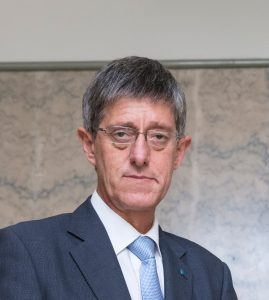
Arlindo Oliveira obtained his BSc and MSc degrees in Electrical Engineering and Computer Science (EECS) from IST and his PhD degree, also in EECS, from the University of California at Berkeley, where he was a Fulbright fellow. He was invited professor at MIT and a researcher at INESC, CERN, the Electronics Research Laboratory of UC Berkeley, the Berkeley Cadence Laboratories, and the University of Tokyo. He was a member of the National Council for Science Technology and Innovation and of the Advisory Board of the Science and Technology Options Assessment (STOA) Panel of the European Parliament. He is a distinguished professor of IST, president of INESC, distinguished visiting professor at Macau University of Science and Technology, member of the board of Caixa Geral de Depósitos and a researcher at INESC-ID. He authored five books and hundreds of scientific articles in the areas of algorithms, artificial intelligence, machine learning, bioinformatics and computer architecture. He has been on the boards of several companies and institutions and is a past president of IST, of INESC-ID and of the Portuguese Association for Artificial Intelligence. He is a member of the Lisbon Academy of Sciences, of the Portuguese Academy of Engineering, and of ACM, a senior member of IEEE and a fellow of ELLIS. He received several prizes and distinctions, including the Technical University of Lisbon/Santander prize for excellence in research, the GALP/Academy of Engineering career prize and the ACEPI career prize.
Engineering for Sustainable Development
This course promotes knowledge about the central role of engineering, and its multiple disciplines, in achieving each of the United Nation’s Sustainable Development goals. This course provides an overview of the engineering innovations that are shaping our world, especially emerging technologies (e.g., data science and big data), which are crucial for addressing the pressing challenges facing humankind and the planet.
Credits: 3 ECTS
Coordinator:
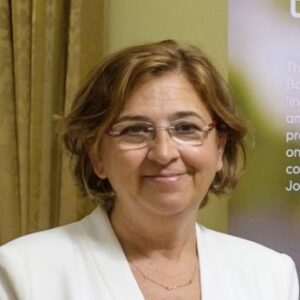
Maria João Pereira é licenciada, mestre e doutorada em Engenharia de Minas pelo Instituto Superior Técnico (IST) da Universidade de Lisboa. É Professora Catedrática no IST, onde desempenhou as funções de Presidente do Centro de Recursos Naturais e Ambiente (CERENA) entre 2013 e 2021. Foi Coordenadora do Mestrado em Engenharia de Petróleos entre 2016 e 2020 e Coordenadora do Doutoramento em Georrecursos entre 2020 e 2021. Ao longo da sua carreira, liderou ou participou em mais de 30 projetos científicos, tendo publicado mais de 120 artigos em revistas científicas e atas de conferências. Exerceu o cargo de Secretária de Estado da Energia no XXIV Governo Constitucional. Atualmente, é Presidente do Departamento de Engenharia de Recursos Minerais e Energéticos do IST.
Maria João Pereira holds a Bachelor’s, Master’s, and PhD in Mining Engineering from Instituto Superior Técnico (IST), University of Lisbon. She is a Full Professor at IST, where she served as Head of the Centre for Natural Resources and the Environment (CERENA) from 2013 to 2021. She was Coordinator of the Master’s Program in Petroleum Engineering from 2016 to 2020 and of the PhD Program in Georesources from 2020 to 2021. Throughout her career, she has led or participated in more than 30 scientific projects and has published over 120 articles in scientific journals and conference proceedings. She served as Secretary of State for Energy in the XXIV Constitutional Government of Portugal. She is currently Head of the Department of Mineral and Energy Resources Engineering at IST.
Research Methodology and Thesis Project
The objective of this course is to prepare a PhD student to develop a research project towards his thesis, teaching aspects related to the preparation and organization of the research project and ways to present and discuss the research to be developed.
Credits: 6 ECTS
Coordinator:
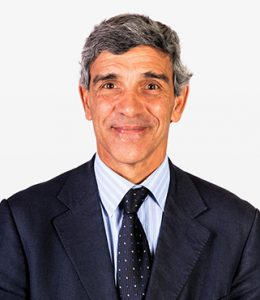
Jorge de Brito is Full Professor in the Civil Engineering, Architecture and Environment Department of Instituto Superior Técnico, University of Lisbon, Portugal. He is presently the Coordinator of the PhD Programme on Civil Engineering at IST. He is co-coordinator of CIB W80 (Service Life Prediction) and the coordinator of CIB W80 (Building Pathology). He was the recipient of the UTL 2011, UL 2016 and UL 2021 Scientific Productivity awards. Over the last 20 years, he has been actively engaged in the edition, reviewing and writing of papers in international peer-reviewed journals. His research publications have earned him the highest ever bibliometric metrics in Civil Engineering in Portugal.
Research Methods and Processes
This course provides an in-depth exploration of research methodologies relevant to the built and non-built environment. Students will learn to design, conduct, and analyze research projects. The course emphasizes both qualitative and quantitative research methods and their practical application in addressing real-world challenges. The course will provide knowledge and skills to understand the fundamental principles of research in the built and natural environment, to identify and select research topics and questions that are appropriate and relevant, to develop a research proposal and design a research plan, to apply both quantitative and qualitative research methods to collect and analyze data, and to critically evaluate research findings and their implications.
Credits: 3 ECTS
Coordinator:
Full Professor and Researcher in Planning, Urbanism and Environment, at IST and Coordinator of the PhD in Land-Use Planning and Organisation and Vice President of the Research Centre CITUA (www.citua.tecnico.ulisboa.pt).
Innovation and Entrepreneurship Seminars with Industry
This course promotes knowledge of innovation and entrepreneurship in its different components and as part of the technological innovation cycle, focusing on the perspective of industry and markets.
Credits: 3 ECTS
Coordinators:
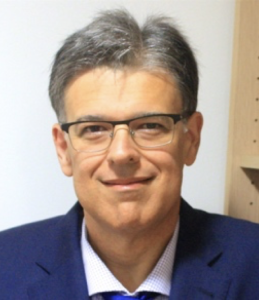
Rui Baptista is Full Professor in Entrepreneurship and Innovation at the Engineering and Management Department of Instituto Superior Técnico (IST). Previous academic posts include the Department of Social and Decision Sciences, Carnegie Mellon University, and the Paul H. O’Neill School of Public and Environmental Affairs, Indiana University Bloomington. From 2012-15 Rui was Full Professor and Chair in International Entrepreneurship at Brunel Business School, Brunel University London.
Rui was Head of the Department of Engineering and Management of IST from 2015-2020 and President of the Centre for Management Studies (CEGIST) from 2010-2012, and a Research Professor (External) with the Max Planck Institute (2004-2010).
Rui holds a Ph.D. from London Business School, University of London. Rui’s research and teaching interests are in entrepreneurship and innovation, and their relationship with industry dynamics, labor markets, regional development. He is Editor of Small Business Economics – An Entrepreneurship Journal. He has published in, among others: Research Policy; Technological Forecasting and Social Change; Journal of Business Venturing; European Economic Review; Regional Studies; International Journal of Industrial Organization; International Entrepreneurship and Management Journal; Journal of Evolutionary Economics; and Annals of Regional Science.
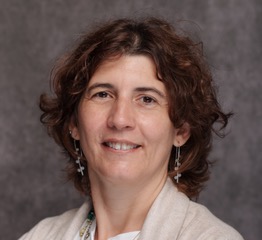
Joana Mendonça is Associate Professor with Habilitation at Instituto Superior Técnico of the University of Lisbon. She is currently vice-president at Instituto Superior Técnico, responsible for the Oeiras Campus.
She was President of the Board of the Nacional Innovation Agency in Portugal (ANI) between May 2021 and March 2023. Between 2010 and 2012, she was Deputy Director at the Directorate for Education and Science Statistics (DGEEC). She was scientific director of the Carnegie Mellon Portugal Partnership (2012-2021) and scientific coordinator at the Center of Engineering and Product Development, CEiiA, (2018-2021). During 2016, she was an assistant to the Minister for Economy for issues related to Innovation and Technology and in 2009-2010, she was an assistant to the Secretary of State for Science, Technology and Higher Education, both in the Government of Portugal.
She is a member of the Center for Innovation, Technology and Policy Research, IN+, where she led the Laboratory of Technology Management and Policy. Her research focuses on management of technology and innovation, technology commercialization and adoption. She teaches Entrepreneurship and Innovation Management and Design Thinking to Masters and PhDs students.
Introduction to Research Practices
This hands-on course introduces students to research practices such us publication strategy, writing and planning research papers, peer-reviewing, organization of scientific events and science communication.
Credits: 6 ECTS
Coordinator:
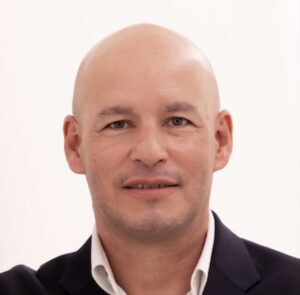
Nuno Jardim Nunes is a Full Professor at Tecnico – University of Lisbon and the President and founder of the Interactive Technologies Institute (ITI). Nuno is a visiting professor at Carnegie Mellon University. Nuno strongly advocates the role of design research in participatory culture and sustainability. His research influenced how digital technologies (including sensors, ML/AI, interactive storytelling, and mixed reality) can engage and inspire digital citizens to act sustainably and connect to nature and the broader ecosystems. Nuno coordinates one of the European lighthouse projects of the New European Bauhaus – the Bauhaus of the Seas. Nuno organised several conferences of the ACM SIGCHI and published more than 200 peer-reviewed papers in international journals and conferences in HCI, software, energy, sustainability, design, and service science. He was PI and co-PI of several research projects totalling more than €25M from European to national and industry-funded.
Energy Transition and Earth Resources
Energy and Mineral Resources are some of the world’s most important sectors and, therefore, in this CU we provide students with a better understanding of the critical role of Mineral Resources for Energy Transition and for society to achieve the goals of sustainable development. To reach these goals a series of Seminars will be presented by the Teaching Staff from the Department of Mineral and Energy Resources Engineering (DER), Industry and other Academic experts in several Energy and Mineral Resources fields.
Credits: 3 ECTS
Coordinator:
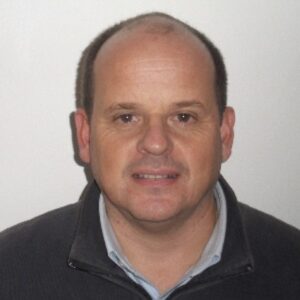
José Manuel Marques hold a degree in Mining Engineering (1989) (IST) and a PhD in Mining Engineering (1999) (IST) with a thesis on the geochemistry of fluids and water-rock interaction. He achieved his Habilitation in Georesources in 2010, focusing on hydromineral and geothermal resources. His work spans teaching (as Associate Professor at IST – 2020) and research (at CERENA). He has been a Member of the Water-Rock Interaction Working Group (WRI-WG) of the International Association of Geochemistry (IAGC), a Member of the Commission on Mineral and Thermal Waters (CMTW), one of the Working Groups of the International Association of Hydrogeologists (IAH) (since 2017), and he was a member of the CERENA Executive Committee from 2020-2022. He has coordinated both undergraduate and master’s degrees in mining, energy resources and geological engineering, and, as of 2023, leading the Doctoral Program in Georesources / Energy and Earth Resources. His research activity has been focused on the development of an R&D line associated with the elaboration of robust conceptual hydrogeological models, with a special emphasis to the study of mineral and thermal waters, and to low-temperature geothermal fluids. He has published 97 documents with 67 Web of Science Core Collection peer-reviewed publications in scientific journals, and is co-author of 1 Book and 26 book chapters.
Artificial Intelligence for Scientific Research
The objective is to provide skills for students integrating AI critically, ethically, and reproducibly in their research activities. Students will learn to choose appropriate tools, verify results, document AI use, recognize limitations, risks, and bias, and build a small workflow applicable to their research.
Period: From 7th September 2026 until 18th December 2026 (1st semester 2026/27
Credits: 3 ECTS
Coordinator:

Ricardo Teixeira, M.Sc. in Economics (ISEG) and Ph.D. in Environmental Engineering (IST), is an Assistant Professor at IST. He teaches Heat and Mass Transfer, Industrial Ecology and Environmental and Natural Resource Economics. He has supervised/co-supervised or is supervising 12 Ph.D. students and more than 20 M.Sc. students in, among other areas, Environmental Engineering, Mechanical Engineering and Sustainable Energy Systems. He has 60 publications in international peer-reviewed scientific journals. His main domains of research are ecological impact assessment, process-based modelling of land use, pasture-based livestock production, remote sensing, machine learning & Life Cycle Assessment. He has academic and consulting experience in the agri-food business. He has participated in international expert groups led by the European Innovation Partnership, UNEP/SETAC Life Cycle Initiative, and is IST’s representative in the Coordinating Council of the F3 College – Food, Farming and Forestry of the University of Lisbon. He is or was principal investigator of 5 scientific projects, including Horizon Europe project “TERRAMARE” (development of an AI-assisted tool for managing trade-offs in the use of biomass in the EU), and FCT-funded project “GrassData” (development of AI algorithms for identification, monitoring and quantification of carbon sequestration in pastures, in collaboration with IFAP).
Lecturers:

Tiago Domingos, M.Sc. in Physical Engineering (IST) and Ph.D. in Environmental Engineering (IST), is an associate professor in Environment and Energy at IST, the engineering school of the University of Lisbon (UL). Tiago Domingos teaches or has taught courses such as Thermodynamics, Environmental Modelling, Environmental Economics, Ecological Economics and Sustainable Development and coordinates the M.Sc. in Environmental Engineering at IST. He has supervised or co-supervised more than 20 PhD students in, among other areas, Environmental Engineering, Sustainable Energy Systems and Economics. Tiago Domingos is coordinator of IST-Ambiente, the IST platform for Environmental Science and Engineering, and president of MARETEC – Marine, Environment and Technology Centre. Tiago Domingos is founder and CEO of Terraprima, an IST Spin-off, winner of the European Commission’s “A World You Like with a Climate You Like” competition for the best climate solution in Europe in 2013. He also won the National Environment Award, the Forum Environment Award – Category “Research”, the Scientific Award UTL/Santander Totta 2010, the Scientific Award UL/Caixa Geral de Depósitos 2020, the Energy Globe Award – Portugal and was semi-finalist of the Land for Life Award (United Nations Convention to Combat Desertification).
Arlindo Oliveira obtained his BSc and MSc degrees in Electrical Engineering and Computer Science (EECS) from IST and his PhD degree, also in EECS, from the University of California at Berkeley, where he was a Fulbright fellow. He was invited professor at MIT and a researcher at INESC, CERN, the Electronics Research Laboratory of UC Berkeley, the Berkeley Cadence Laboratories, and the University of Tokyo. He was a member of the National Council for Science Technology and Innovation and of the Advisory Board of the Science and Technology Options Assessment (STOA) Panel of the European Parliament. He is a distinguished professor of IST, president of INESC, distinguished visiting professor at Macau University of Science and Technology, member of the board of Caixa Geral de Depósitos and a researcher at INESC-ID. He authored five books and hundreds of scientific articles in the areas of algorithms, artificial intelligence, machine learning, bioinformatics and computer architecture. He has been on the boards of several companies and institutions and is a past president of IST, of INESC-ID and of the Portuguese Association for Artificial Intelligence. He is a member of the Lisbon Academy of Sciences, of the Portuguese Academy of Engineering, and of ACM, a senior member of IEEE and a fellow of ELLIS. He received several prizes and distinctions, including the Technical University of Lisbon/Santander prize for excellence in research, the GALP/Academy of Engineering career prize and the ACEPI career prize.
Mário Figueiredo is a Distinguished Professor at Instituto Superior Técnico, University of Lisbon, with the Department of Electrical and Computer Engineering, and holds the Feedzai Chair on Machine Learning. He is a group leader and area coordinator at Instituto de Telecomunicações. His interests include machine learning, signal processing, and optimization. He has received several honors and awards, namely: Fellow of the Institute of Electrical and Electronics Engineers (IEEE), Fellow of the International Association for Pattern Recognition (IAPR), Fellow of the European Association for Signal Processing (EURASIP), and of Fellow of ELLIS (European Laboratory for Learning and Intelligent Systems); IEEE Signal Processing Society Best Paper Award, W. R. G. Baker Award (IEEE), Pierre Devijver Award (IAPR), EURASIP Technical Achievement Award. He is a member of the Portuguese Academy of Engineering and of the Lisbon Academy of Science.

Susana Vieira is an Associate Professor with the Department of Mechanical Engineering, Instituto Superior Técnico (IST), Universidade de Lisboa, and a senior researcher (FCT Investigator) at the Center of Intelligent Systems, IDMEC. She received the MSc and PhD degrees both in Mechanical Engineering in 2005 and 2010, respectively, from IST, University of Lisbon, Portugal. She was an Invited Teacher at the Erasmus University of Rotterdam, the Netherlands in 2009/2010. Her main research area is Soft Computing, more specifically she works in feature selection, fuzzy modeling, fuzzy optimization and metaheuristics. Her research focuses mainly on the development of computational intelligence methods for knowledge data discovery and development of decision support systems. She has authored or coauthored 22 peer reviewed journal papers, 7 book chapters, and more than 70 conference papers in the field of computational intelligence. She has collaborated in 11 national research projects and one international network. She is principal investigator of one project and was task coordinator in three of the projects. Presently she is a member of the task force on Fuzzy Systems for Web Intelligence of the IEEE Computational Intelligence Society.

Sérgio Pequito is an Associate Professor in the Department of Electrical and Computer Engineering, IST, and a principal investigator in the Evolutionary Systems and Biomedical Engineering Lab at the Institute for Systems and Robotics in Lisbon. Pequito is an IEEE senior member and was awarded the best student paper finalist in the 48th IEEE Conference on Decision and Control (2009), the 2016 O. Hugo Schuck Award in the Theory Category by the American Automatic Control Council, and the José Tribolet Award 2026. His research consists of understanding the global qualitative behavior of large-scale systems from their structural or parametric descriptions and provides a rigorous framework for the design, analysis, optimization, and control of large-scale systems. His interests span neuroscience and biomedicine, where dynamical systems, control theory, and artificial intelligence can be leveraged to develop new analysis tools for brain dynamics toward effective personalized medicine and improve bidirectional interfaces.